Why Allegra?
Every Romansh word in the course is traceable to the Pledari Grond, the official dictionary of the Lia Rumantscha — attested headword, gender and meaning.
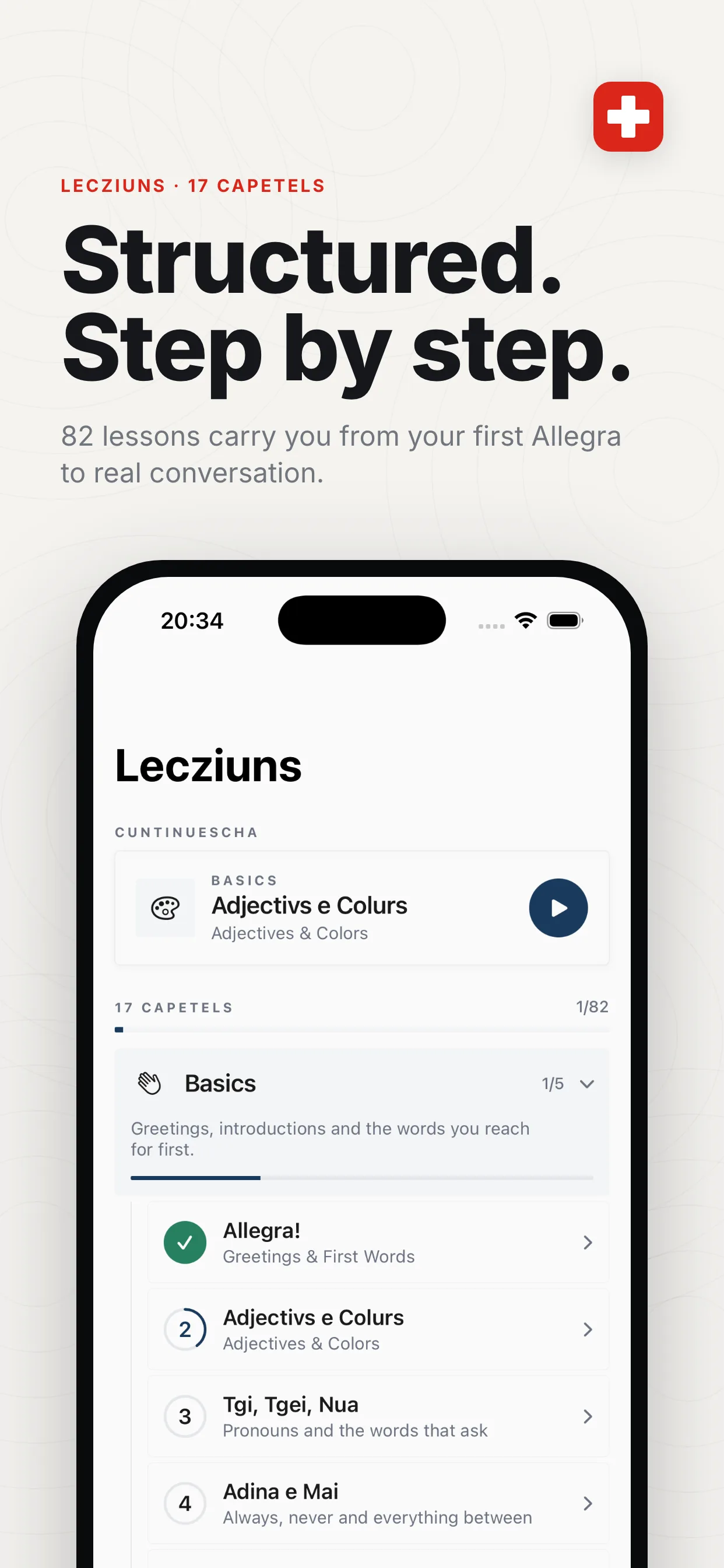
From your first Allegra to real conversation — greetings, numbers, daily life, travel, food, grammar and the verbs that hold it all together.
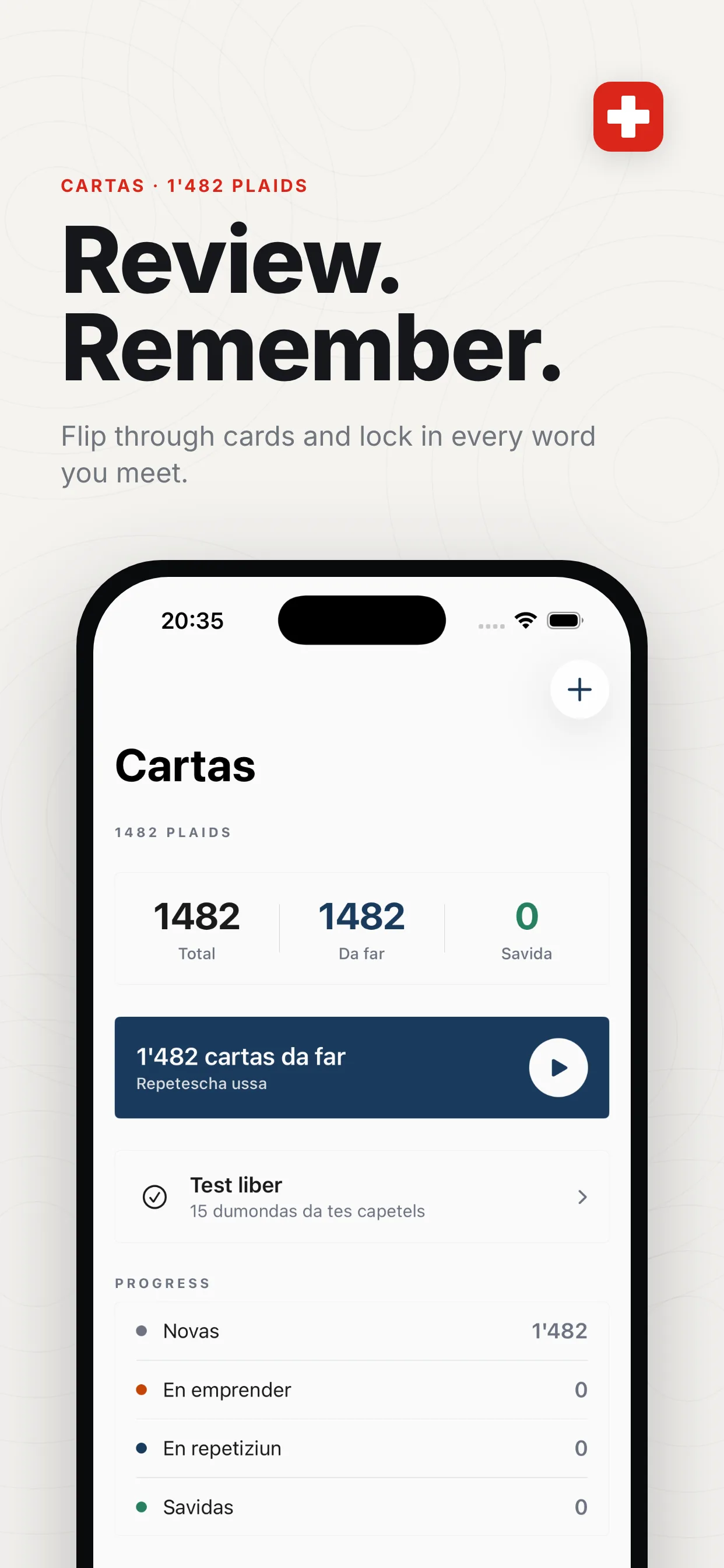
Flashcard decks schedule each word on its own review curve, so the ones you keep forgetting come back and the ones you know get out of the way.
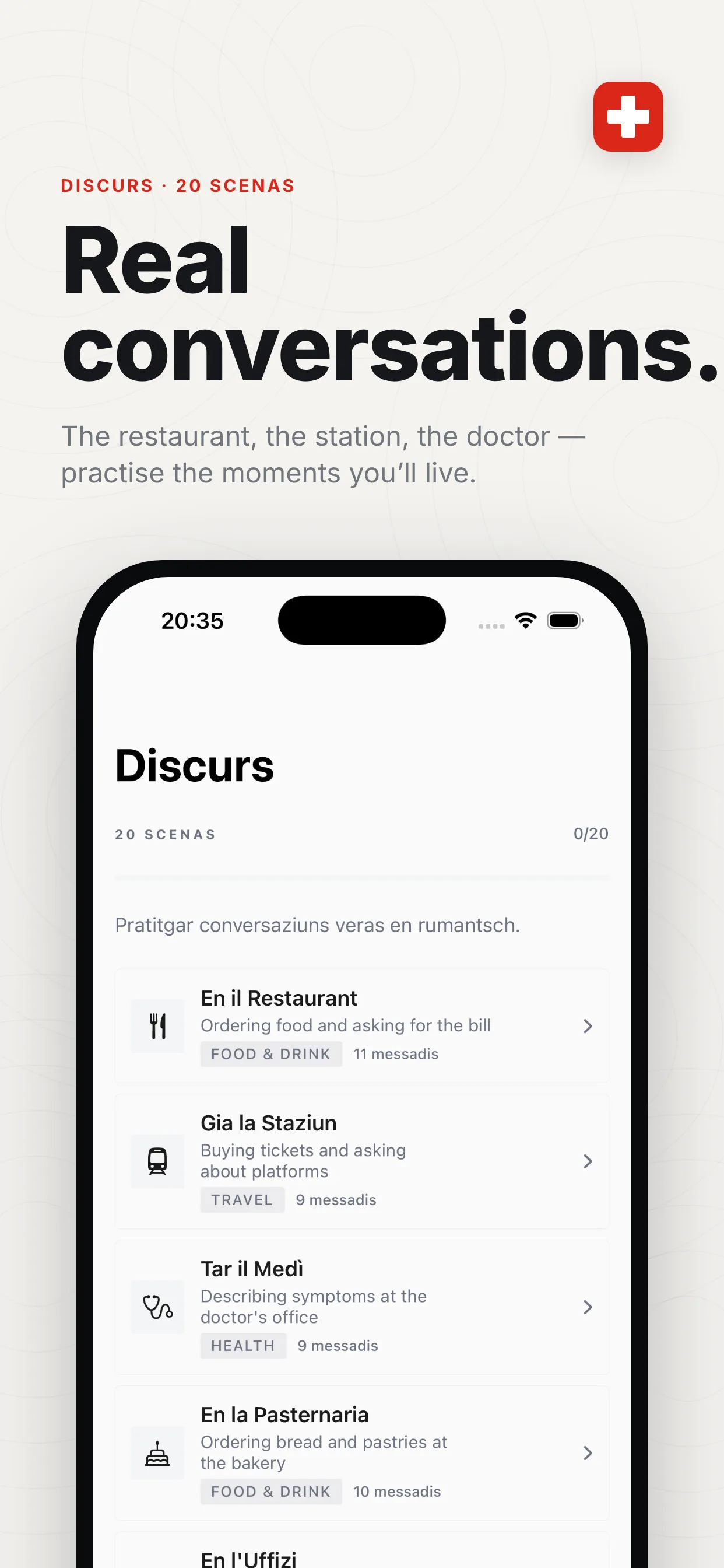
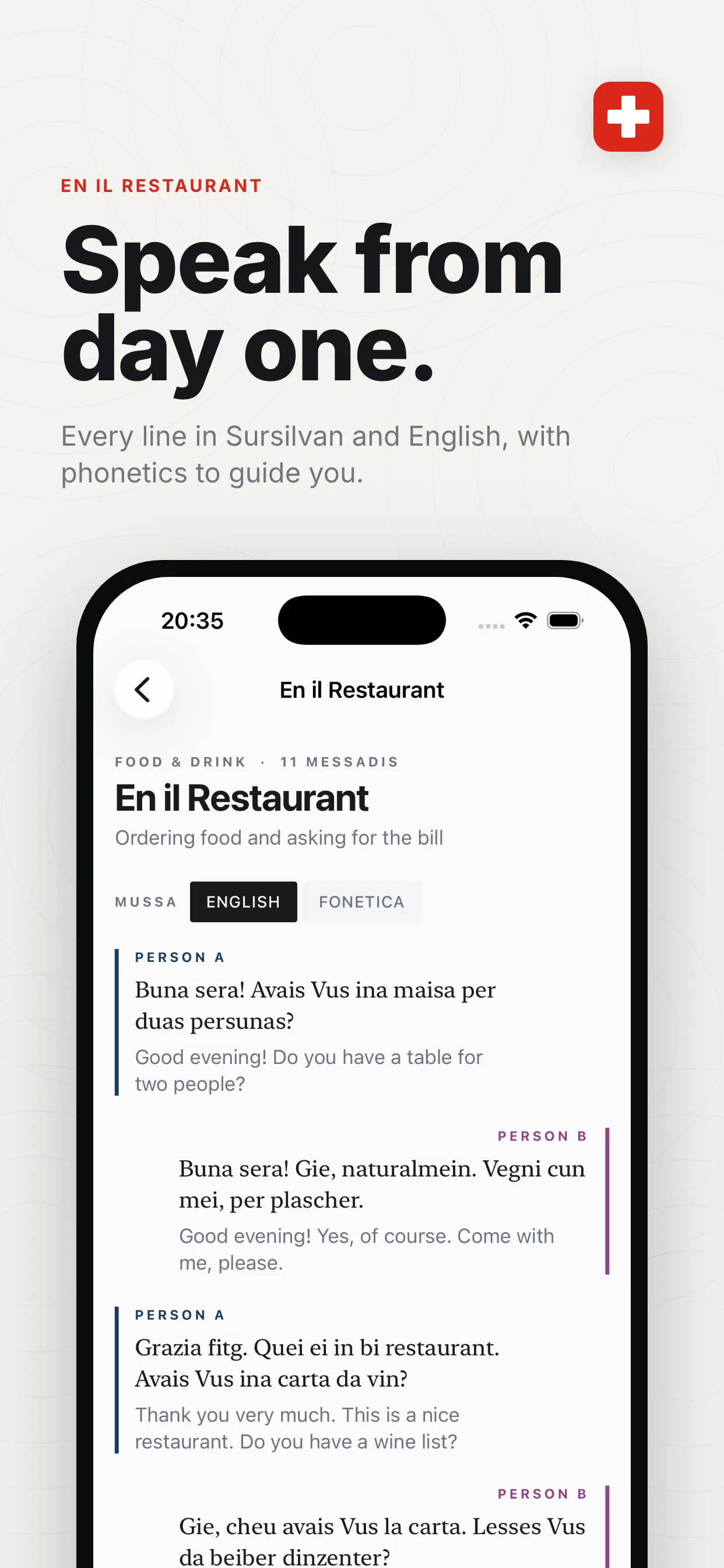
The restaurant, the station, the doctor, the ski slope, the school. Every line in Sursilvan and English, with the phonetics underneath.
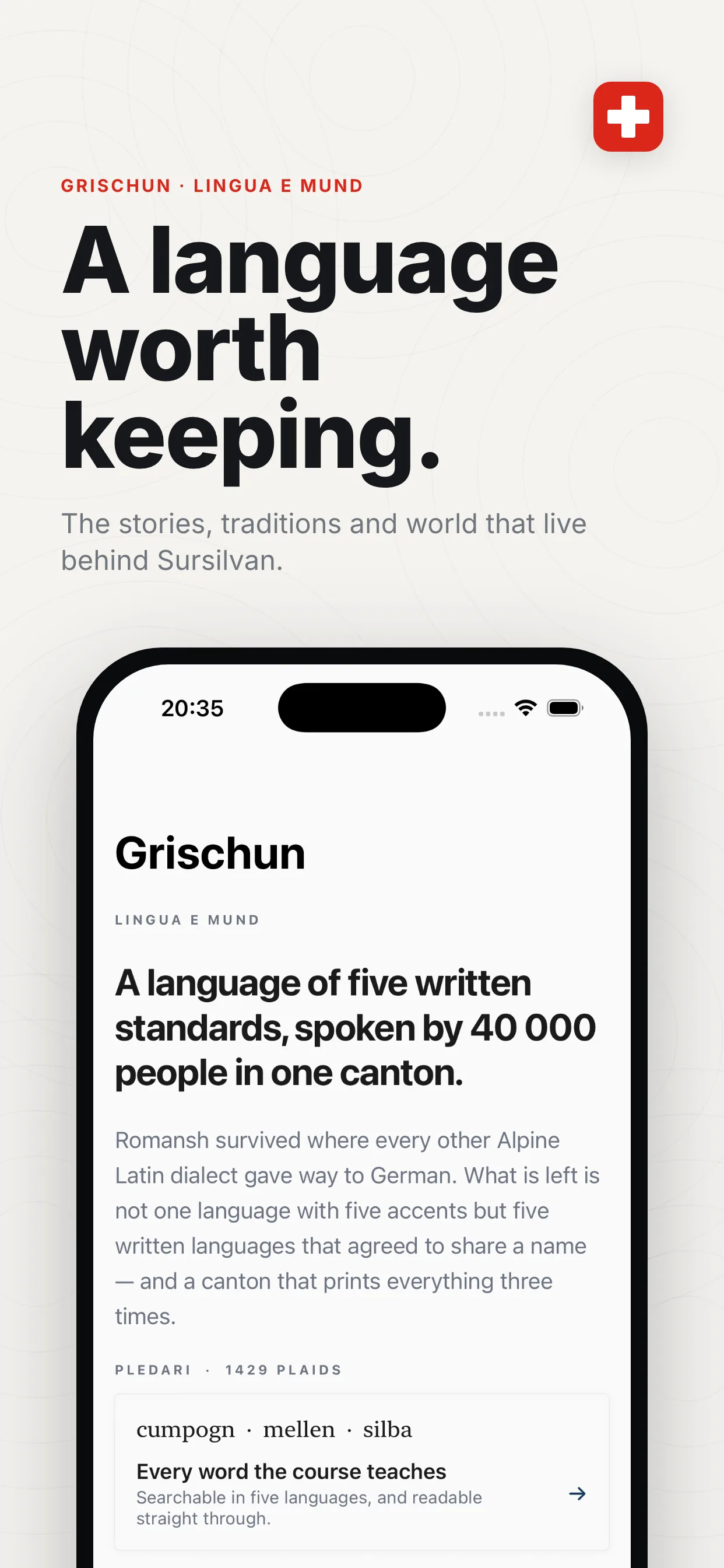
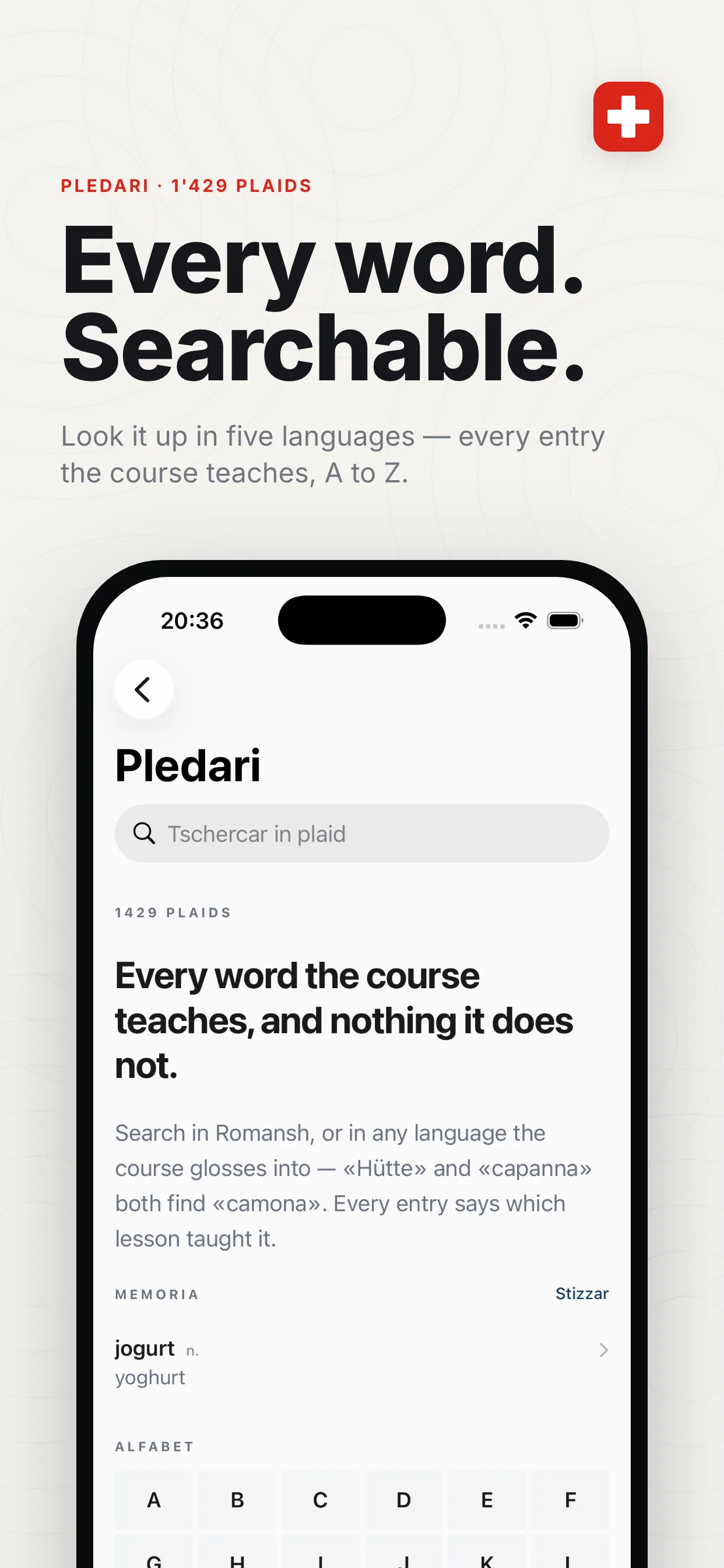
A searchable dictionary of every word the course teaches, A to Z. Search in Romansh, English, German, Italian or French — Hütte and capanna both find camona.
The whole course — every gloss, every explanation, every chapter blurb — in English, German, Italian or French. No screen quietly falls back to English.
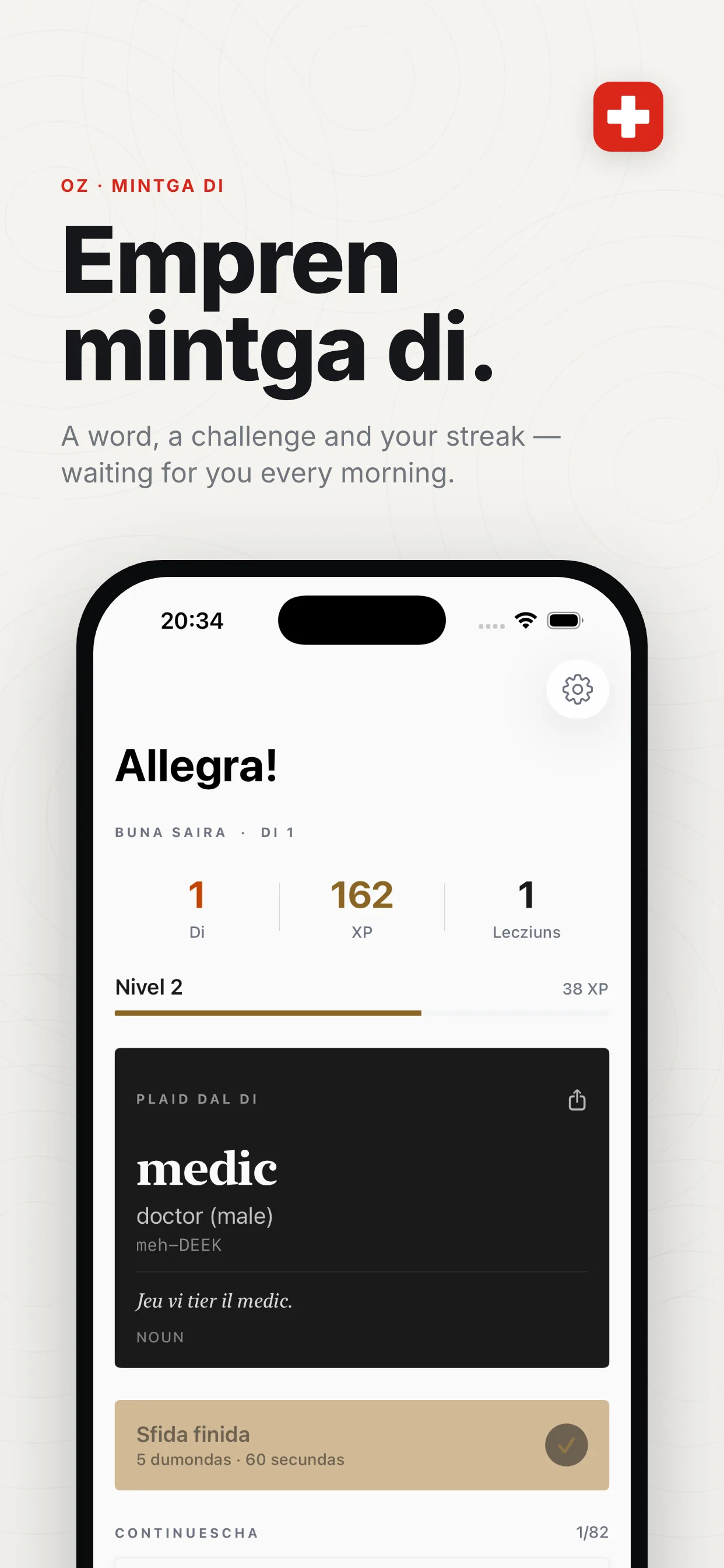
Open the app to one word, one challenge and your streak — a small, finishable thing waiting for you every morning.
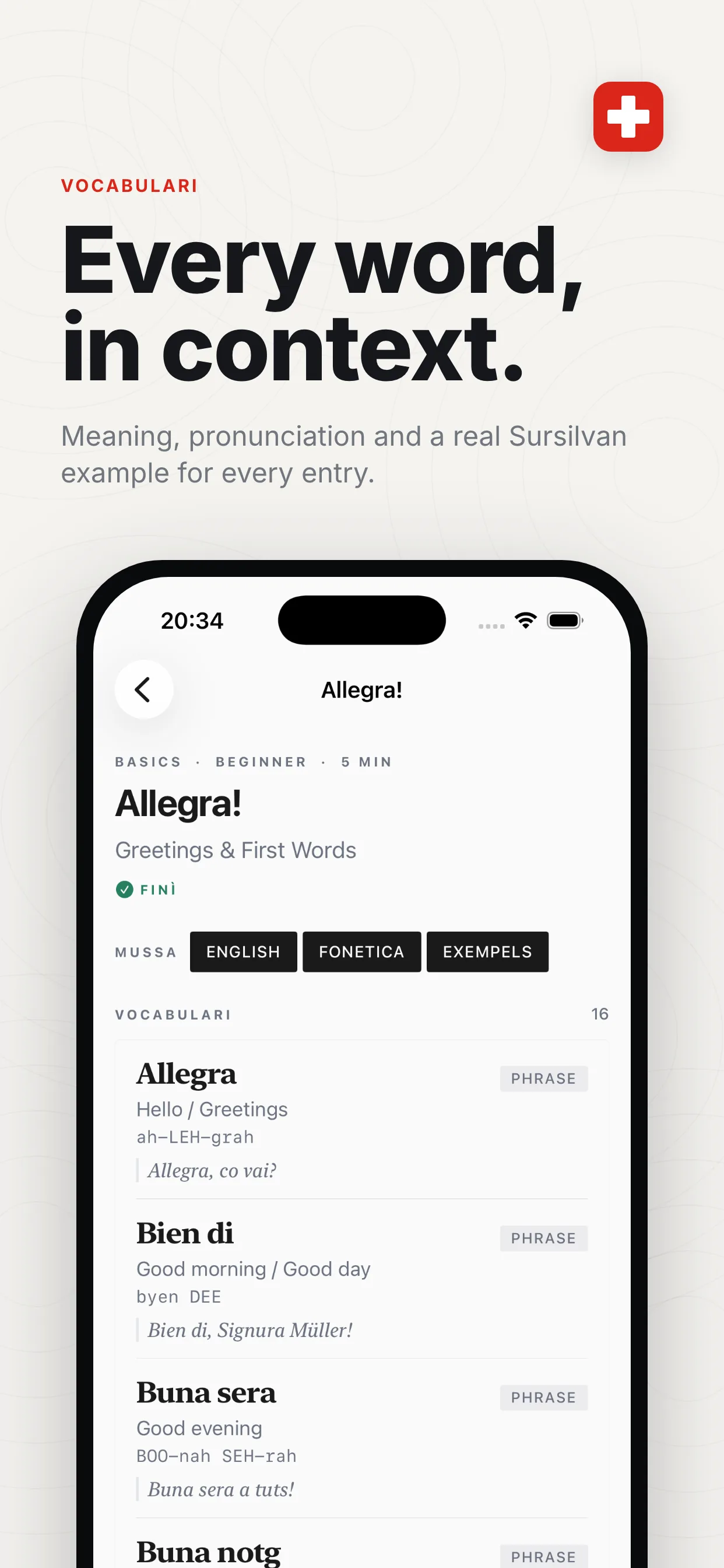
Every headword and every dialogue line carries a spelled-out pronunciation with the stress in capitals — citad reads chee‑TAHD.
The world behind the language: essays on Romansh today, a year of Grisons observances, a timeline, and the Latin roots the words came from.
Lecziuns
Allegra, gratcha fitg & first words
Counting, prices & quantities
Mornings, routines & the week
Trains, tickets & directions
Capuns, caffè & the market
Relations & the house
Mountains, valleys & weather
Customs, festivals & the valleys
Esser, haver & the everyday ones
Gender, plurals & word order
Shops, prices & paying
The body, the doctor & feeling unwell
Jobs, the office & the day
School, learning & the classroom
Affection, invitations & feelings
Turns of phrase from the valleys
Phones, screens & modern life
Discurs
Ordering food and asking for the bill.
Buying tickets and asking about platforms.
Describing symptoms at the doctor’s office.
A day on the ski slopes.
A parent speaking with a teacher.
Hiking through the Swiss Alps.
Visiting a Romansh cultural museum.
Opening an account and banking services.
Screenshots
Sursilvan
Every Day
Lessons
Vocabulary
Dialogues
At the Restaurant
Flashcards
Grischun
Pledari
Begin Today
Ils Idioms
Romansh is written five ways, one per valley group, plus a modern pan-regional standard. Allegra teaches Sursilvan — and shows you, word by word, how the others differ.
Surselva, the upper Rhine — the one you learn here
Hinterrhein valley
Surses and the Albula
Upper Engadine
Lower Engadine and Val Müstair
No valley — a written standard